
Hi friends! 👋
It was a busy week in the markets, and there’s a lot to hit on. Here’s what I’m looking at today.
Year Five Starts Now
Inflation Is Back
It’s All About AI
Under the Hood: Banks, Small Caps, and the Canary
I Said I’d Worry. I’m Worried.
Where My Portfolio Stands
Thanks for reading Spilled Coffee. Let’s get into it.
Eric
A tough week for the bulls.
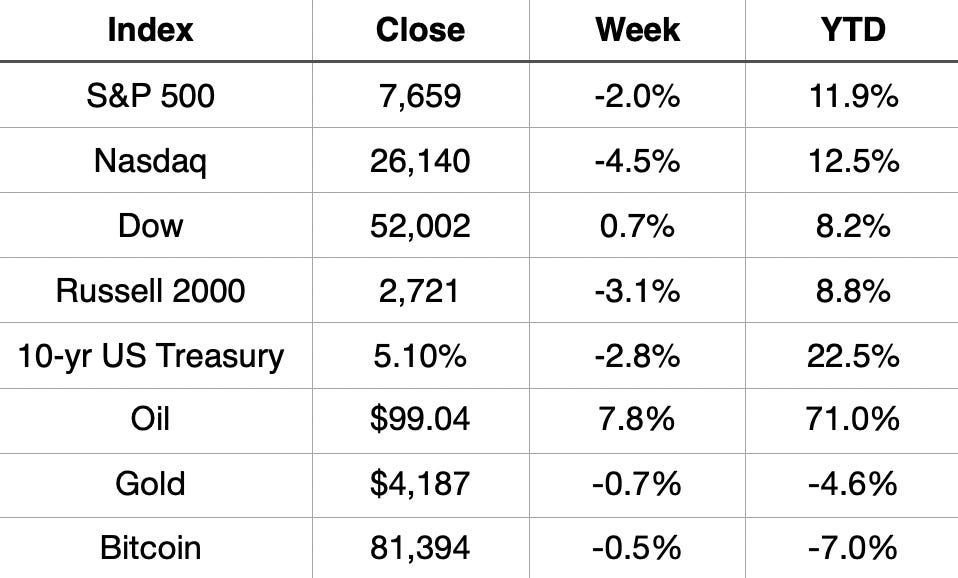
The S&P 500 fell 2.0% and the Nasdaq dropped 4.5%, snapping a 4-week winning streak. Tech took the biggest hit, and Friday was the worst of it.
Small caps didn’t get a break either. The Russell 2000 fell 3.1% and is now down 6 weeks in a row.
But not everything was red. The Dow finished up 0.7%. Money didn’t leave the market. It just moved out of tech and into the steadier, more defensive names. That’s the rotation story you’ll hear about throughout this issue.
The biggest move of the week was oil. Up 7.8% to $99, and now up 71% on the year. That’s a big reason inflation is running hot.
Interestingly, the 10-year Treasury yield actually eased this week, down to 5.10%. Still high, but moving in the right direction for now.
Gold and Bitcoin were both slightly lower.
Market Recap
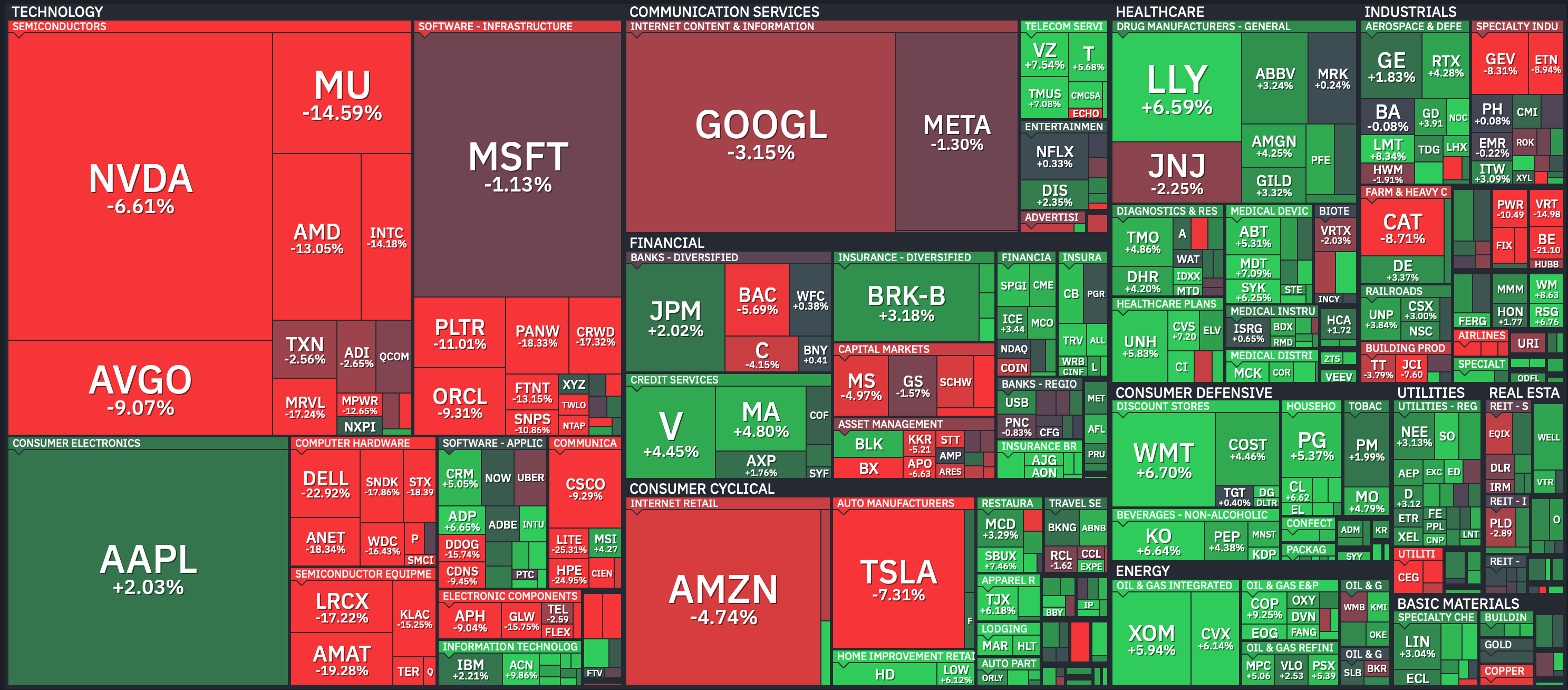
Weekly Heat Map of Stocks
Sentiment Check
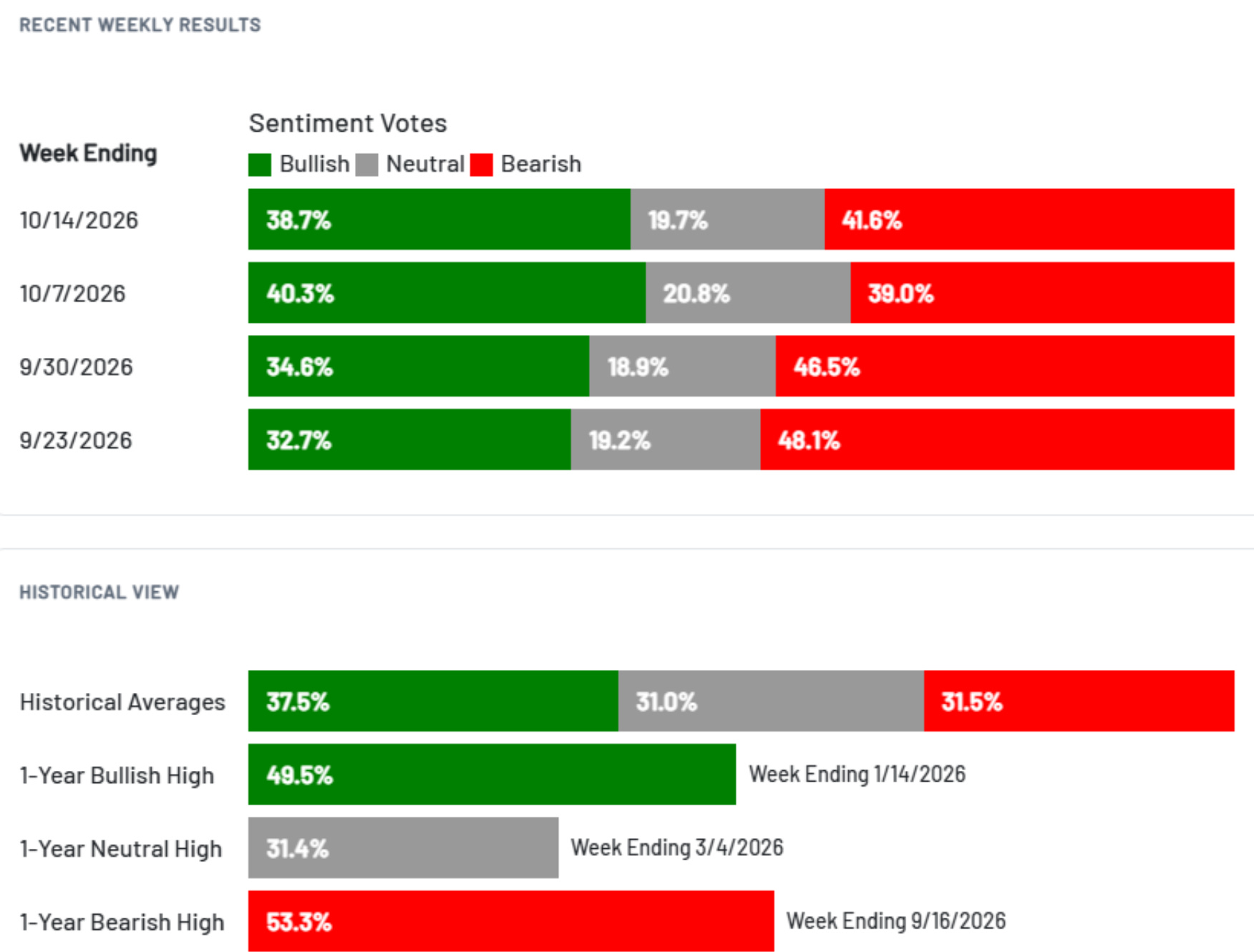
Bears regained control of sentiment this week for the 12th time in the past 16 weeks.
Year Five Starts Now
This bull market turned 4 years old on Monday.
Since the October 12, 2022 low, the S&P 500 is up about 118%. That’s not a bounce. That’s one of the best runs in modern market history, and it’s tracking right alongside some of the great bull markets of the past.
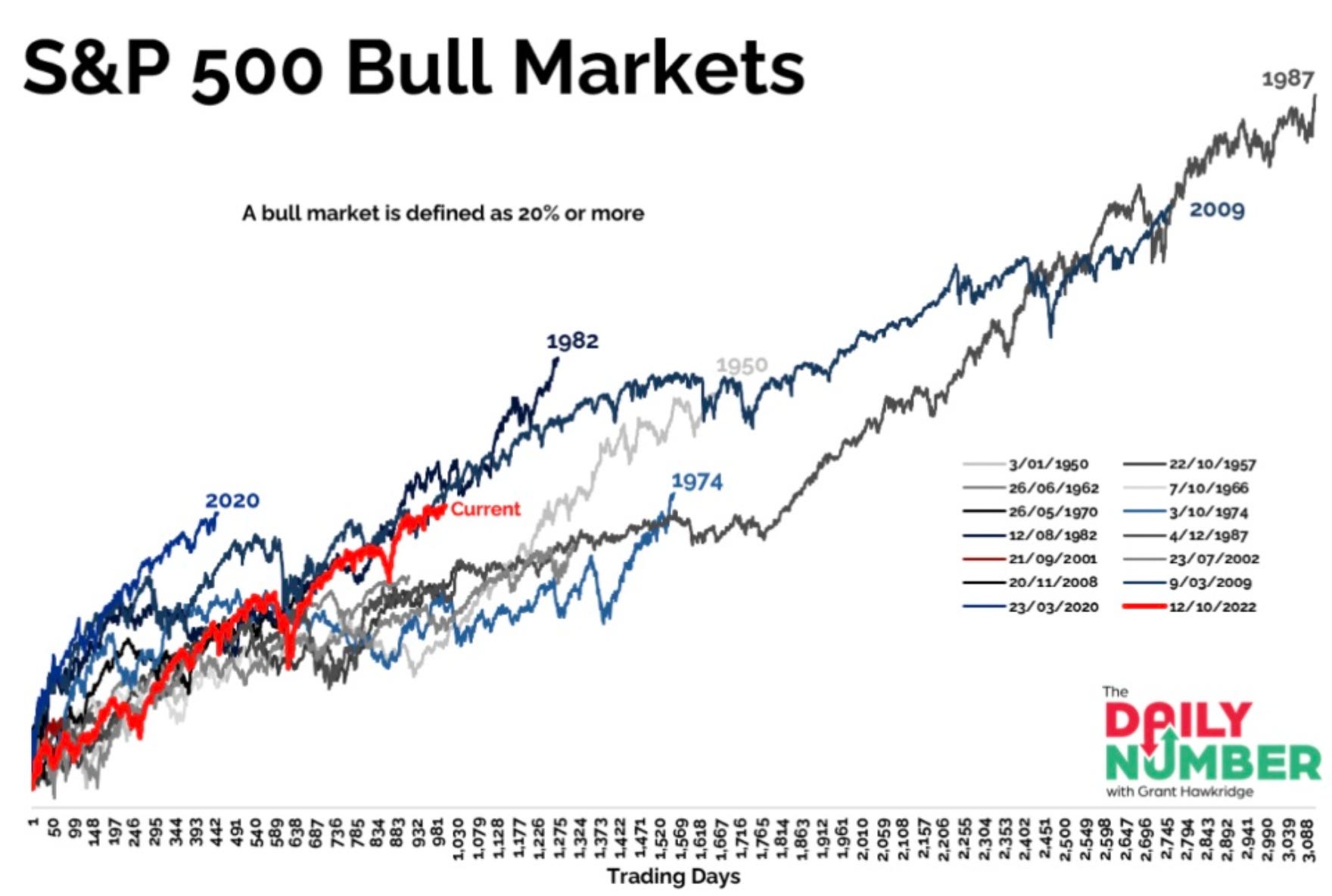
So what happens in year five? History says it’s usually a good one.
Since 1950, seven bull markets have made it to their fifth year. All seven were higher in year five. The average gain was 18.9%. The median was 18.5%.
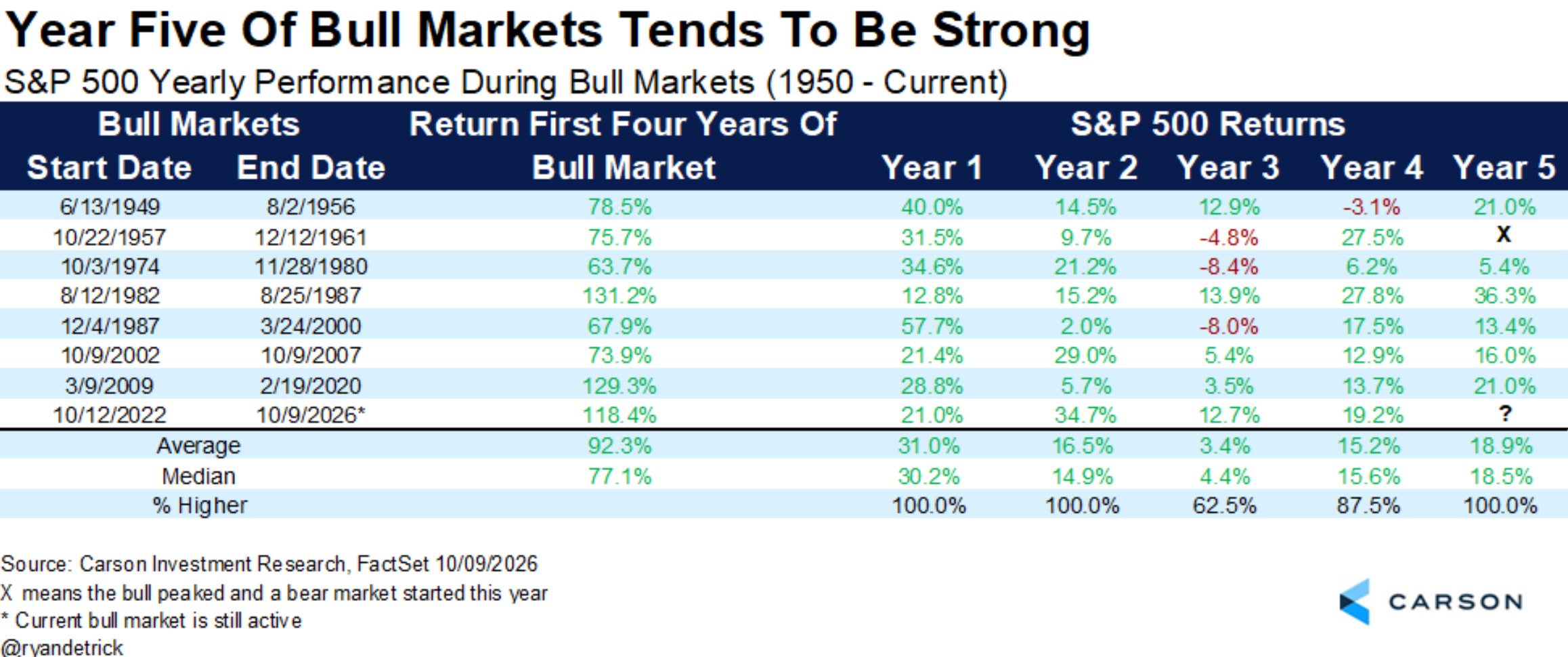
Seven isn’t a huge sample size. But it’s encouraging. Bull markets that make it this far have historically had a way of continuing.
Now, the last two weeks I’ve been writing about how bad breadth was getting under the surface. Fewer and fewer stocks were participating. That was a real concern.
That’s changing.
The percentage of S&P 500 stocks above their 20, 50, and 200-day moving averages all stopped falling and turned higher. Stocks above their 20-day went from under 20% at the end of September to over 66% this week. That’s a big swing in just a couple of weeks.
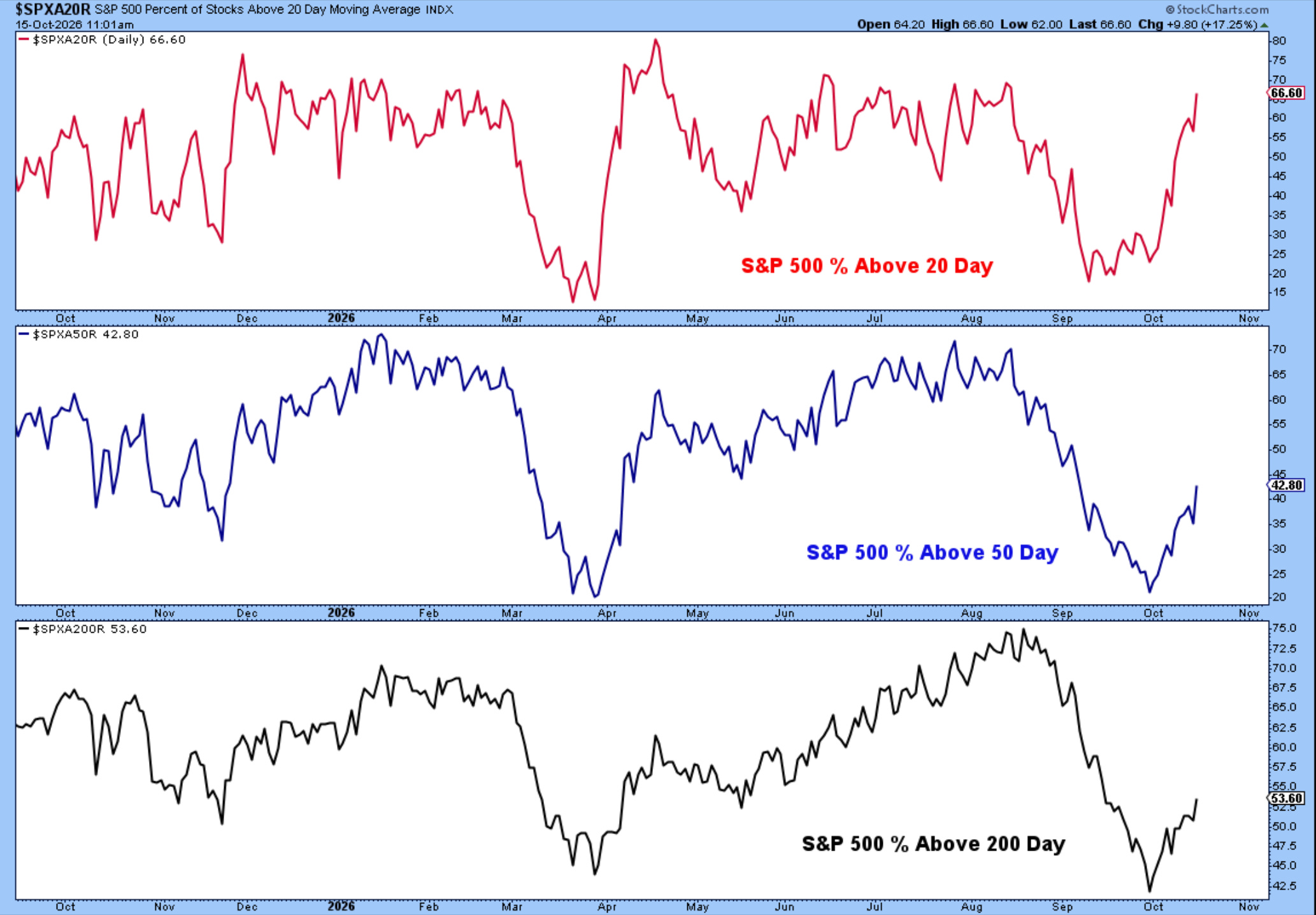
And here’s what matters most. While breadth was falling apart, the index didn’t get dragged down with it. It held. Then breadth bounced.
That’s resilience. That’s what strong markets do.
The S&P 500 just refuses to break this trendline. Every time it’s been tested since July, buyers have stepped in. It’s sitting just over 2% from all-time highs.
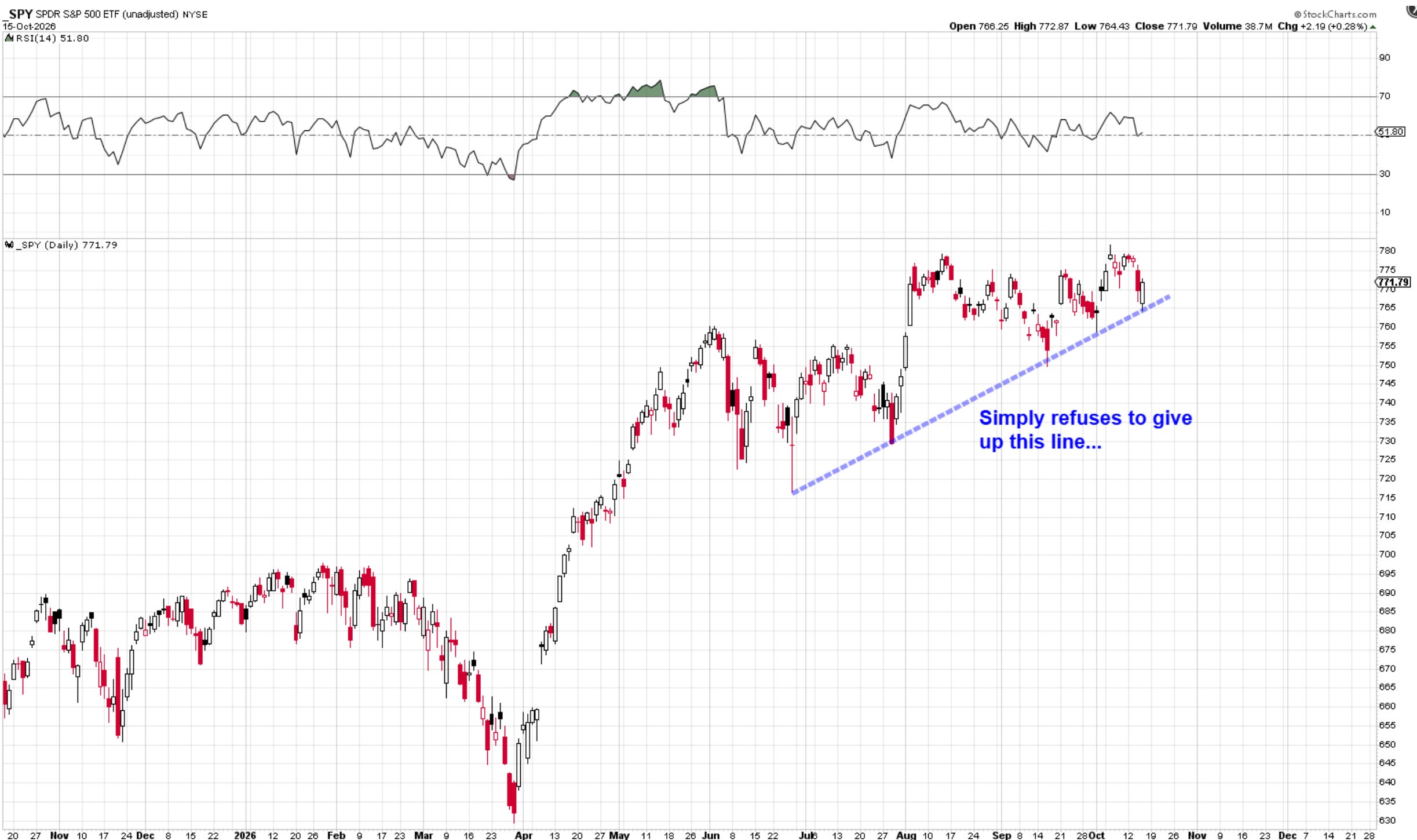
From here, it comes down to earnings. Over the next couple of weeks, we’ll hear from the biggest companies in the market. If Q3 earnings stay strong and keep showing growth, this bull market isn’t stopping.
Inflation Is Back
Another week, another hot inflation report. Actually, two of them.
Start with consumer prices. CPI rose to 3.7% in September, above the 3.6% expected and the highest reading since May. Prices rose 0.6% in just one month, also the biggest jump since May.
Core CPI, which strips out food and energy, climbed to 2.6%. That was above the 2.5% expected and up from 2.4% in August.
So where is it coming from? Mostly energy. Fuel oil is up 74% over the past year. Gasoline is up 34%. Airfares are up 22%.
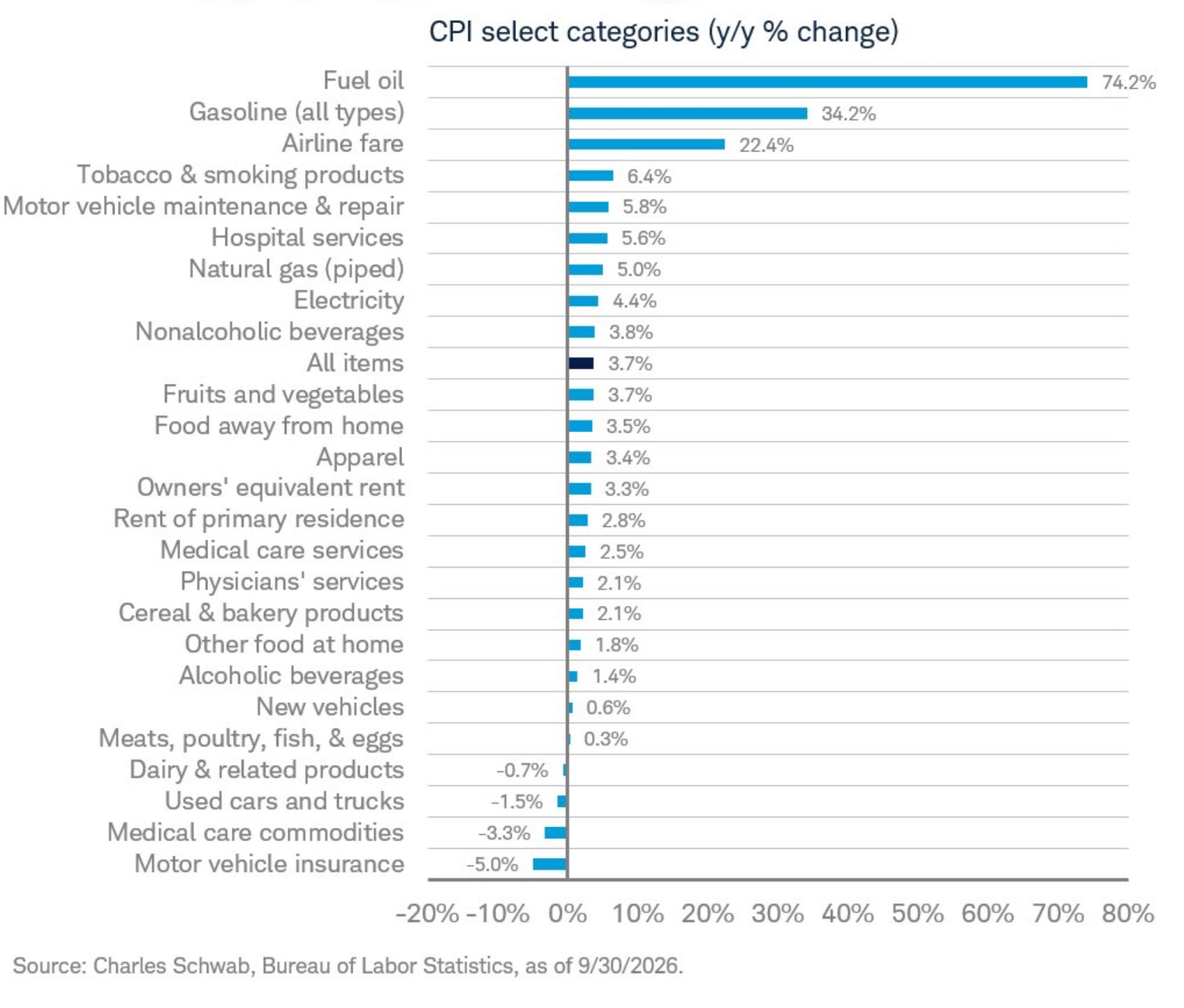
If you’ve filled up your tank or booked a flight lately, none of this is news to you.
But the bigger surprise came from business inflation.
PPI, which measures what businesses pay, jumped to 6.3% in September, up from 5.4% in August. The expectation was 5.3%. That’s not a small miss. Core PPI, which excludes food and energy, came in at 5.0% versus 4.4% expected.
On a monthly basis, PPI rose 1.3%. That’s more than double the 0.6% expected and one of the biggest monthly jumps in four years.
And this wasn’t just energy. Even after stripping out food and energy, business prices are running hot.
Here’s why that matters. Businesses are facing rising costs while consumers are already dealing with elevated prices. Companies can absorb some of that pressure, but they can’t do it forever. Eventually it shows up in their profit margins, in the prices you pay, or both.
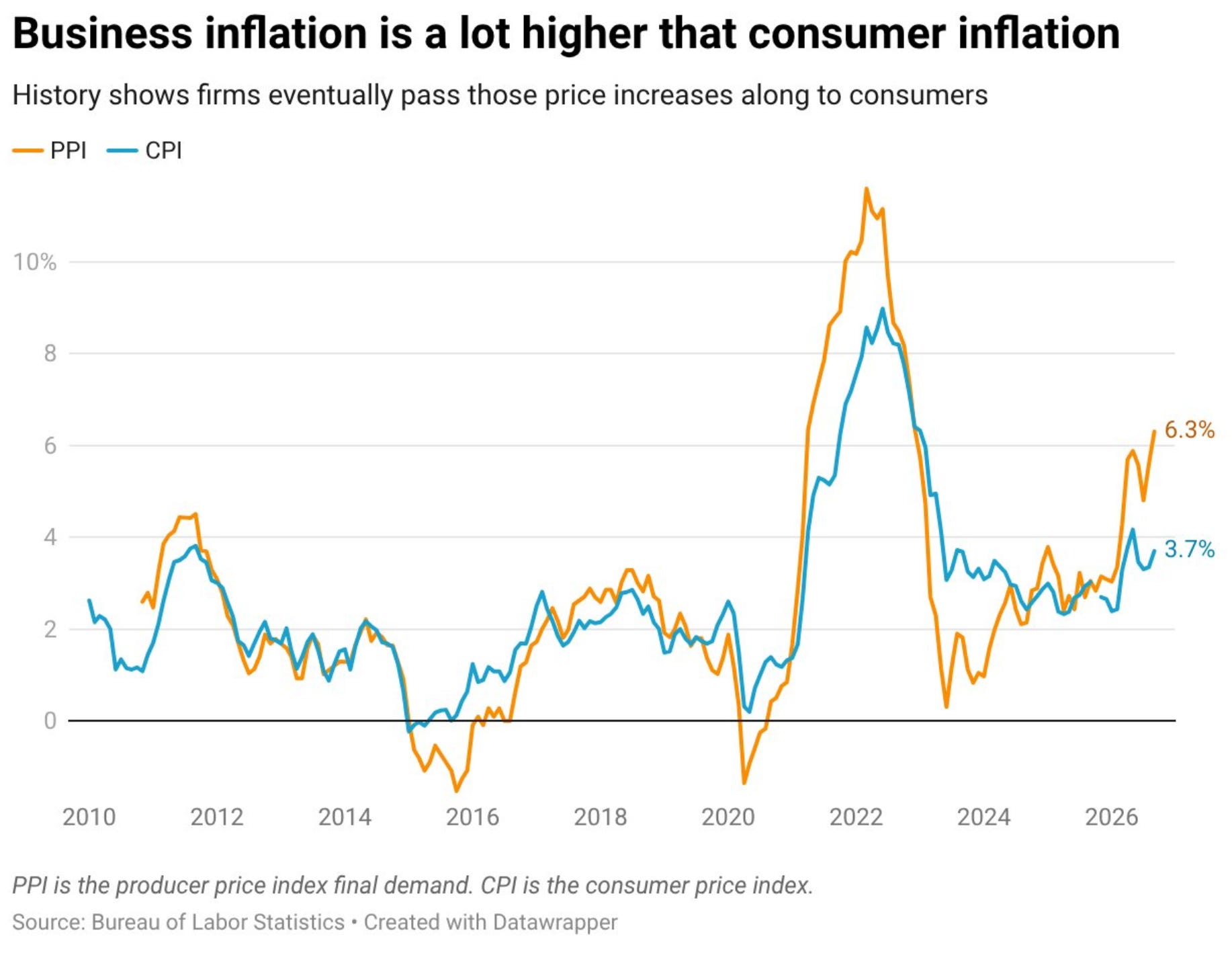
For anyone keeping score, consumer inflation is now nearly double the Fed’s 2% target. Business inflation is more than triple it.
The market noticed. The odds of a rate hike are rising fast.
There’s one more chart worth watching. Commodities relative to long-term Treasury bonds just hit their highest level since 2008.
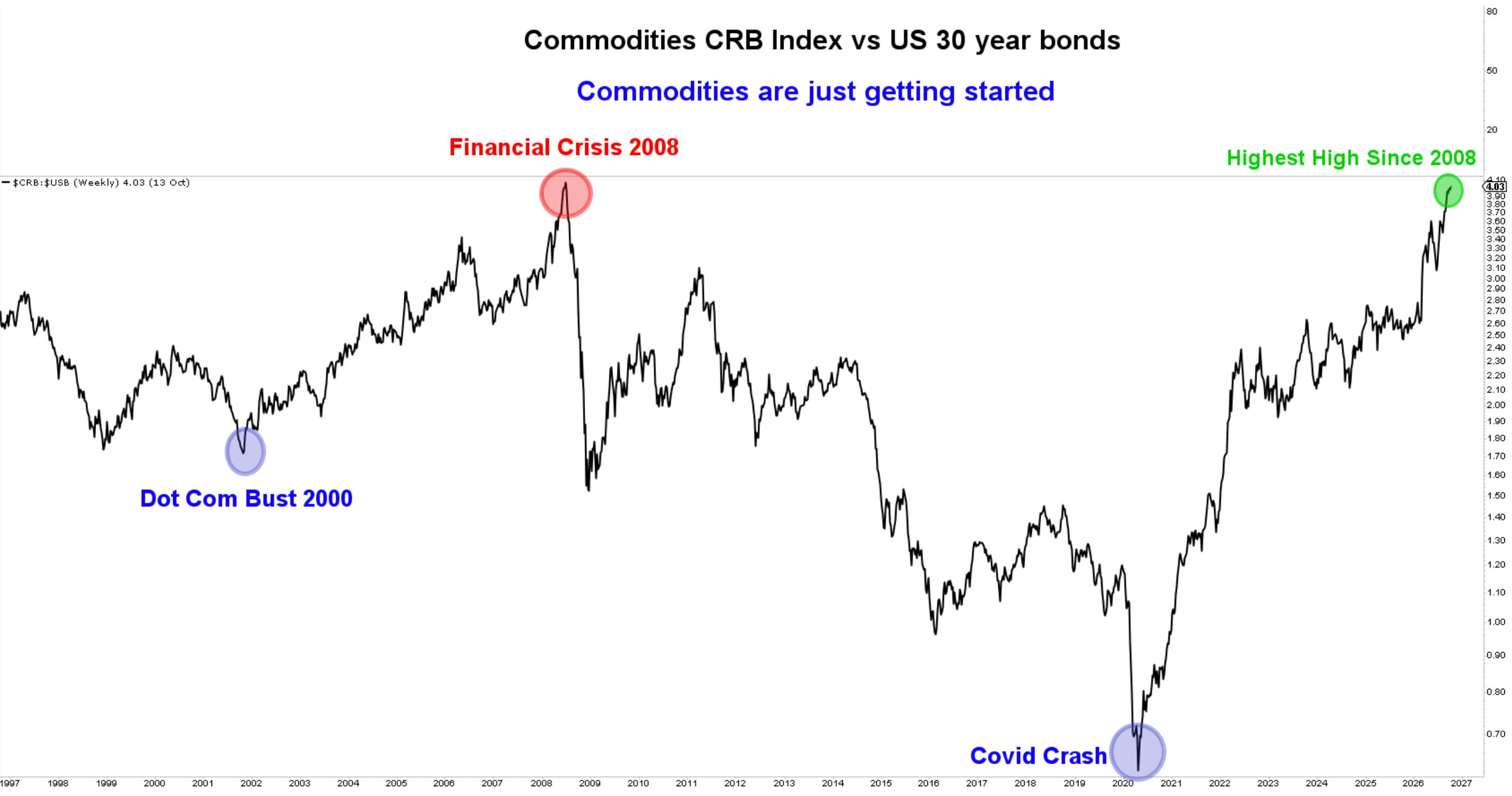
The last time this ratio got this high was right before the financial crisis. When commodities are beating bonds like this, the market is signaling it expects inflation pressure to stick around. And rising yields have a way of breaking things.
This fight against inflation is likely to take longer than anyone wants.
But here’s the strange part. The market barely flinched. And the reason has nothing to do with inflation.
It’s All About AI
So why didn’t the market care about two hot inflation reports?